Final Experience
A platform that lets people send personalized digital messages and real-world surprises to passengers during a flight, turning travel into a shared emotional moment.
Deliverables & Methods
User Interviews, Need Finding & Problem Framing, Experience Stories, Experience Patterns, User Flows, State Diagrams, High-Fidelity UI Designs, Prototyping
View Prototype
Creator Flow
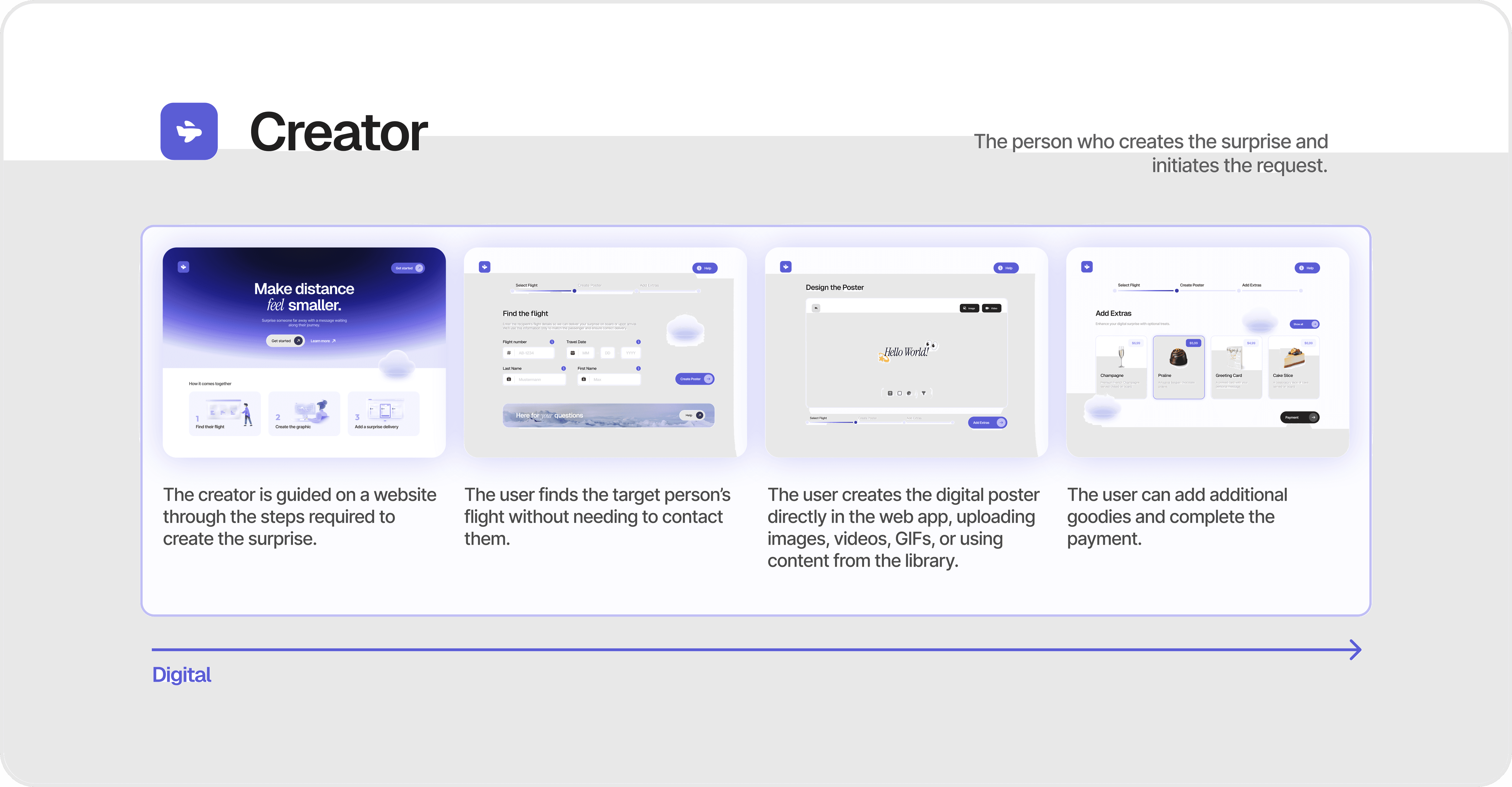
A web-based flow guides users through the process of creating a surprise for someone on a flight without requiring direct coordination.
Instead of relying on private booking details, the system allows users to identify a specific flight by combining known parameters such as name, route, and travel date. This reduces friction while still making it possible to target the correct passenger. Once the flight is identified, users can create a personalized digital message using images, videos, or simple text-based layouts. To extend the experience beyond the digital layer, optional physical extras such as small gifts can be added during checkout and are later delivered onboard.
Passenger Flow
The passenger experience focuses on timing, subtlety, and emotional impact.
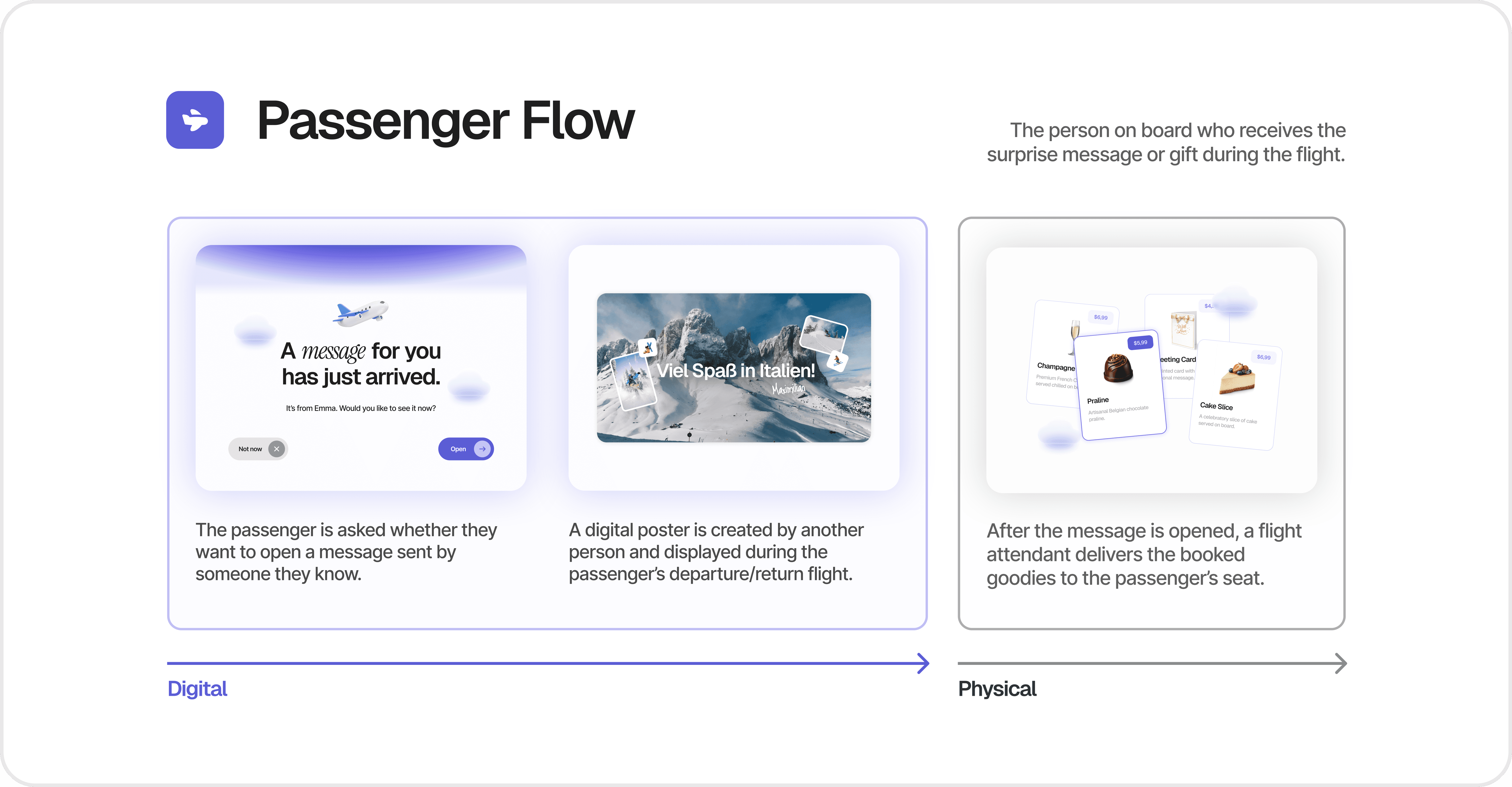
During the flight, a notification appears on the seat display asking whether the passenger wants to open a message. Once accepted, a full-screen digital poster is revealed, creating a moment of surprise within the otherwise routine flight experience.
The interaction is designed to remain lightweight and non-intrusive, allowing passengers to engage on their own terms.
Flight Attendant Flow
A lightweight cabin crew interface connects the digital interaction with a physical outcome.
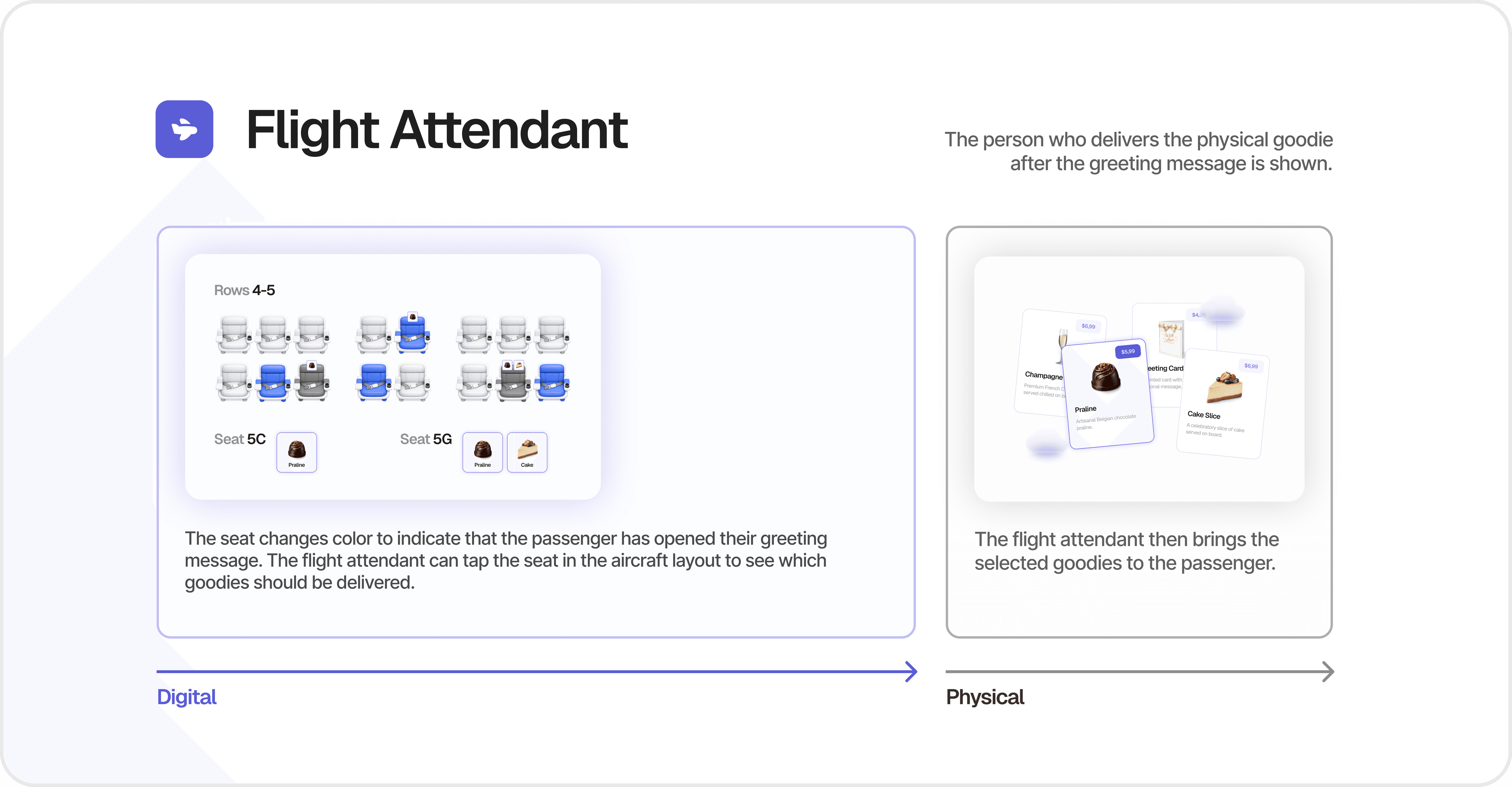
After a passenger opens their message, the corresponding seat is highlighted in the aircraft layout. Flight attendants can access the seat to view associated items and deliver the selected extras directly.
This step completes the experience by translating a digital gesture into a real-world interaction.
Process
The project originated from the observation that air travel is highly transactional, while opportunities for personal and emotional interaction are limited.
Initial exploration focused on translating familiar behaviors such as welcome signs or airport greetings into a digital context. Early concepts included public displays in airports, but these were discarded due to privacy concerns and feasibility limitations.
The concept was then refined to operate entirely within the aircraft environment, where context, timing, and control are more predictable. From there, three interconnected flows were developed: the creator, the passenger, and the cabin crew.
The final outcome balances feasibility with emotional impact by combining a minimal digital interaction with an optional physical extension.
Project Note
This project was developed as part of a university course in collaboration with Timo Köthe, Johanna Grüneberg, Duy Tran, Gjergj Kukaj and Johannes Specht